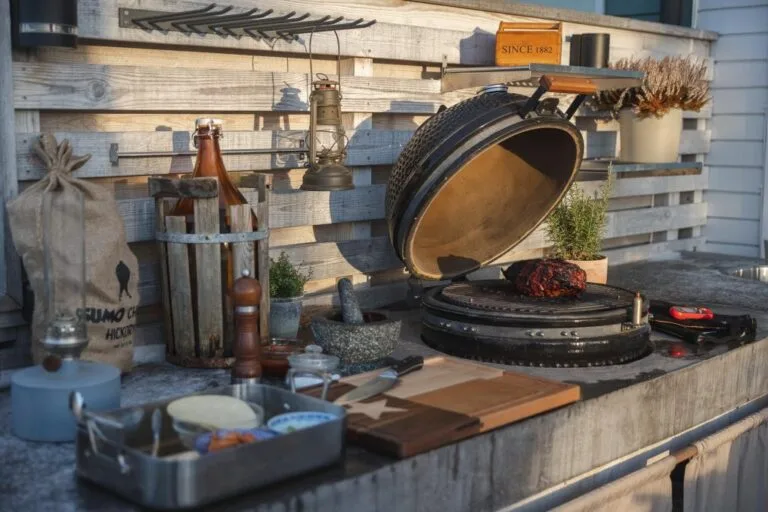
Build a lasting fire.
Keep lump charcoal ready for a steady, indirect cook.
Give a tougher cut time to become tender. A steady charcoal fire, indirect heat and a little planning turn a long cook into something worth waiting for.
EXPLORE THE GUIDE ↓︎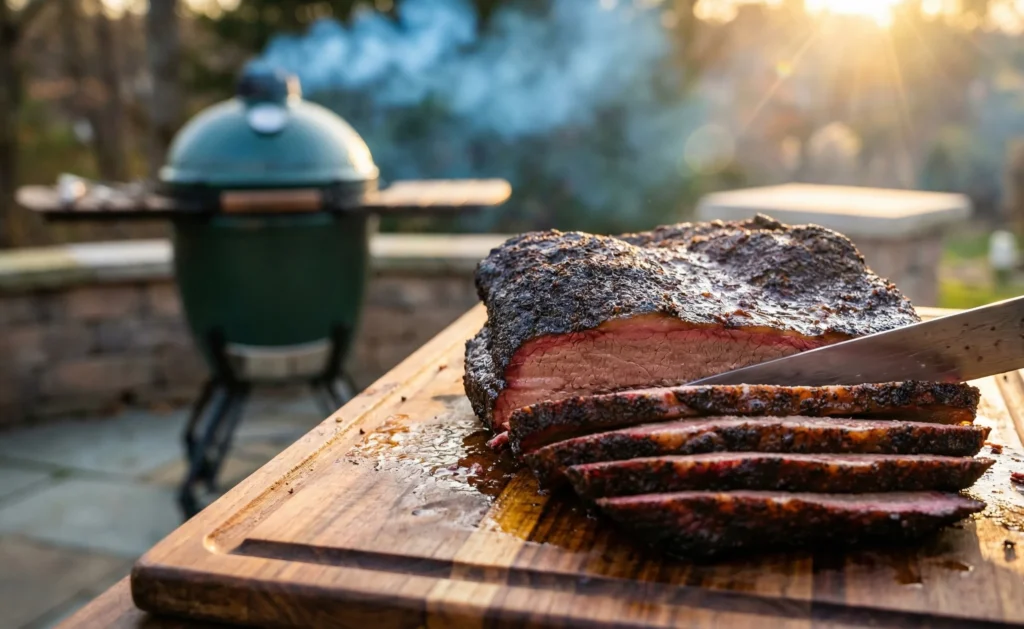
A LITTLE SUMO KNOW-HOW
Give a tougher cut time to become tender. A steady charcoal fire, indirect heat and a little planning turn a long cook into something worth waiting for.
Pork shoulder, ribs and brisket need different cooking times. Choose a recipe and allow time for resting as well as cooking. The original describes the familiar 100-120°C low-and-slow range, but follow the temperature specified for your cut rather than one setting for everything.
Clear cold ash from the airflow path, arrange good lump charcoal and light a small area. Use heat deflectors for indirect cooking and a suitable drip tray below the food. Bring the grill up gradually: hot ceramic takes time to cool down.
Airflow controls combustion. Make small vent adjustments and give the grill time to respond before changing them again. Keep the lid closed as much as possible. Ceramic stores heat, but wind, fuel, food load and vent settings still affect the cook.
Use a modest amount of smoking wood and let the fire burn cleanly before adding food. Heavy, stale smoke can taste bitter. Chunks suit a longer cook; add chips using the chip-feeder where your model supports it.
Use a food thermometer and the recipe’s doneness checks. A safe temperature and a tender texture are separate milestones for barbecue cuts. Stay available to monitor the fire and never use a charcoal grill indoors or in an enclosed space.
CHOOSE FOR THE WAY YOU COOK
Useful equipment, with a clear purpose for your next cook.
Keep lump charcoal ready for a steady, indirect cook.
Hickory chunks suit a longer cook. Start with a modest amount.
Check the centre temperature alongside your recipe’s tenderness cues.
TRY IT ON YOUR SUMO
KEEP EXPLORING
Find a recipe to try, gather your ingredients and bring everyone around the table.
EXPLORE GRILL TIPS ↗︎Choose your recipe before lighting the charcoal. Match the setup to your grill and follow the instructions for the equipment you use.
Pork shoulder, ribs and brisket need different cooking times. Choose a recipe and allow time for resting as well as cooking. The original describes the familiar 100-120°C low-and-slow range, but follow the temperature specified for your cut rather than one setting for everything.
Clear cold ash from the airflow path, arrange good lump charcoal and light a small area. Use heat deflectors for indirect cooking and a suitable drip tray below the food. Bring the grill up gradually: hot ceramic takes time to cool down.
Airflow controls combustion. Make small vent adjustments and give the grill time to respond before changing them again. Keep the lid closed as much as possible. Ceramic stores heat, but wind, fuel, food load and vent settings still affect the cook.